

Museum Without Walls
Museum Without Walls are designated locales of reclamation and reintroduction of Weston’s people of African descent. Our goals are simple: to bring about awareness of the lives and contributions of this once obscured population before and after they became citizens, and honor the Black forebears, their descendants, and their achievements that helped to make Weston the town we all love today.
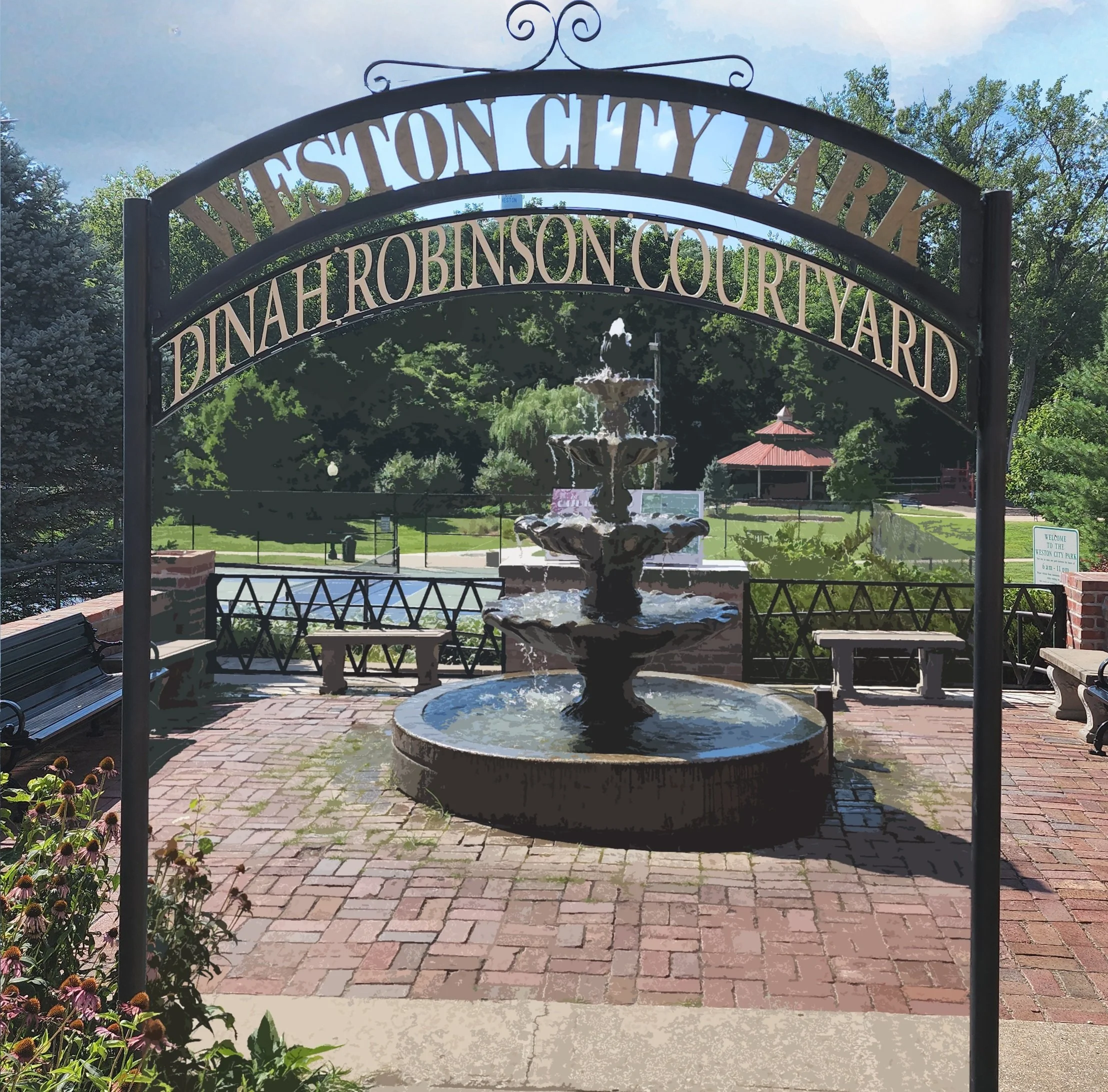
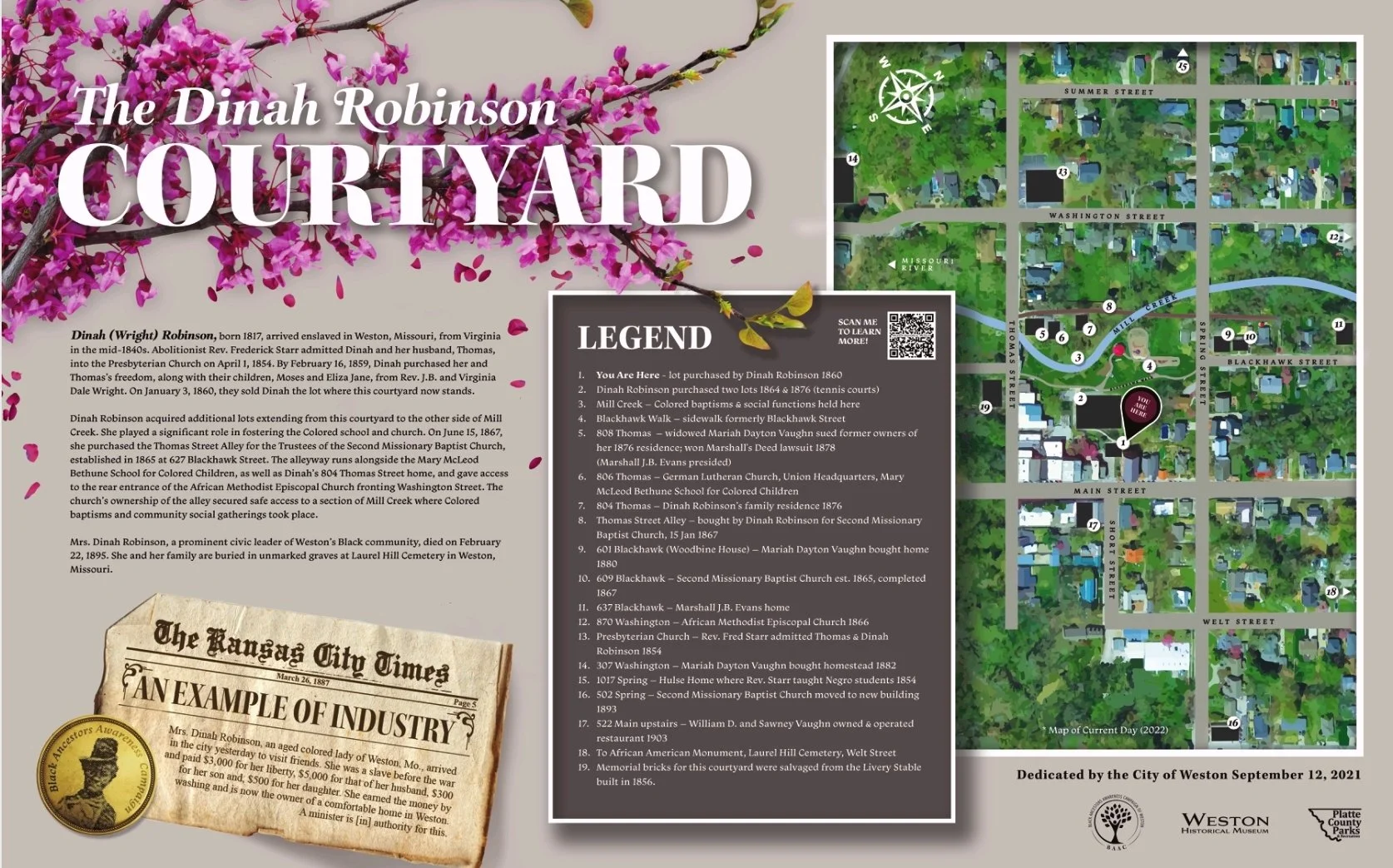
THE DINAH ROBINSON COURTYARD
Dinah (Wright) Robinson, born about 1817, arrived in Weston, Missouri, from Hedgesville, Berkeley County, Virginia, as an enslaved person in 1842. On February 16, 1859, she purchased her freedom from Rev. J.B.Wright, as well as that of her husband, Thomas, and their children, Moses and Eliza Jane. Mrs. Robinson then purchased the lot this courtyard now stands on January 3, 1860.
The 1856 antebellum bricks along the retaining walls have been engraved with the names of her formerly enslaved neighbors buried without a marker at Laurel Hill Cemetery, as well as good wishes from Weston merchants and loved ones.
The Dinah Robinson Courtyard is the inaugural Museum Without Walls memorial, established in 2021.
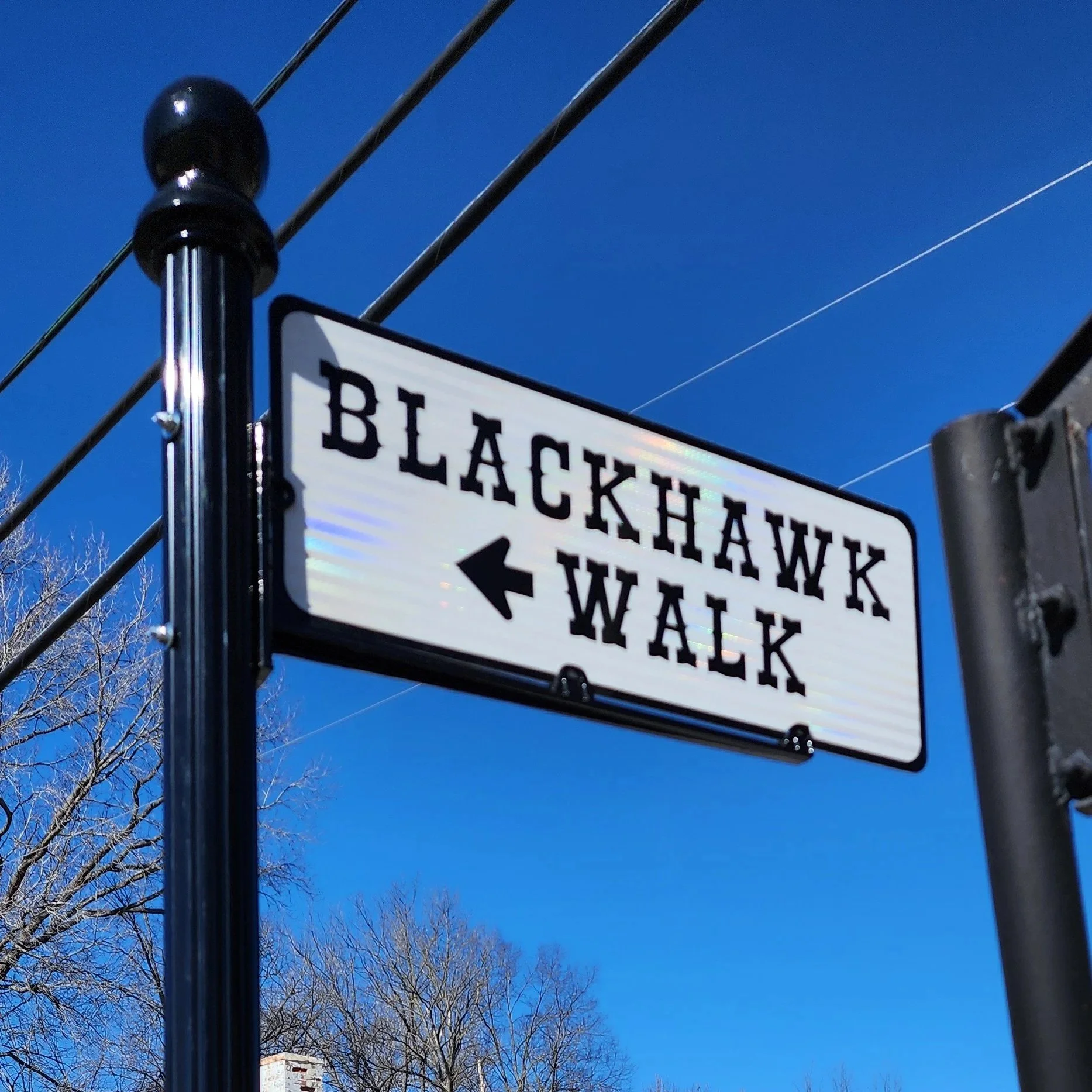
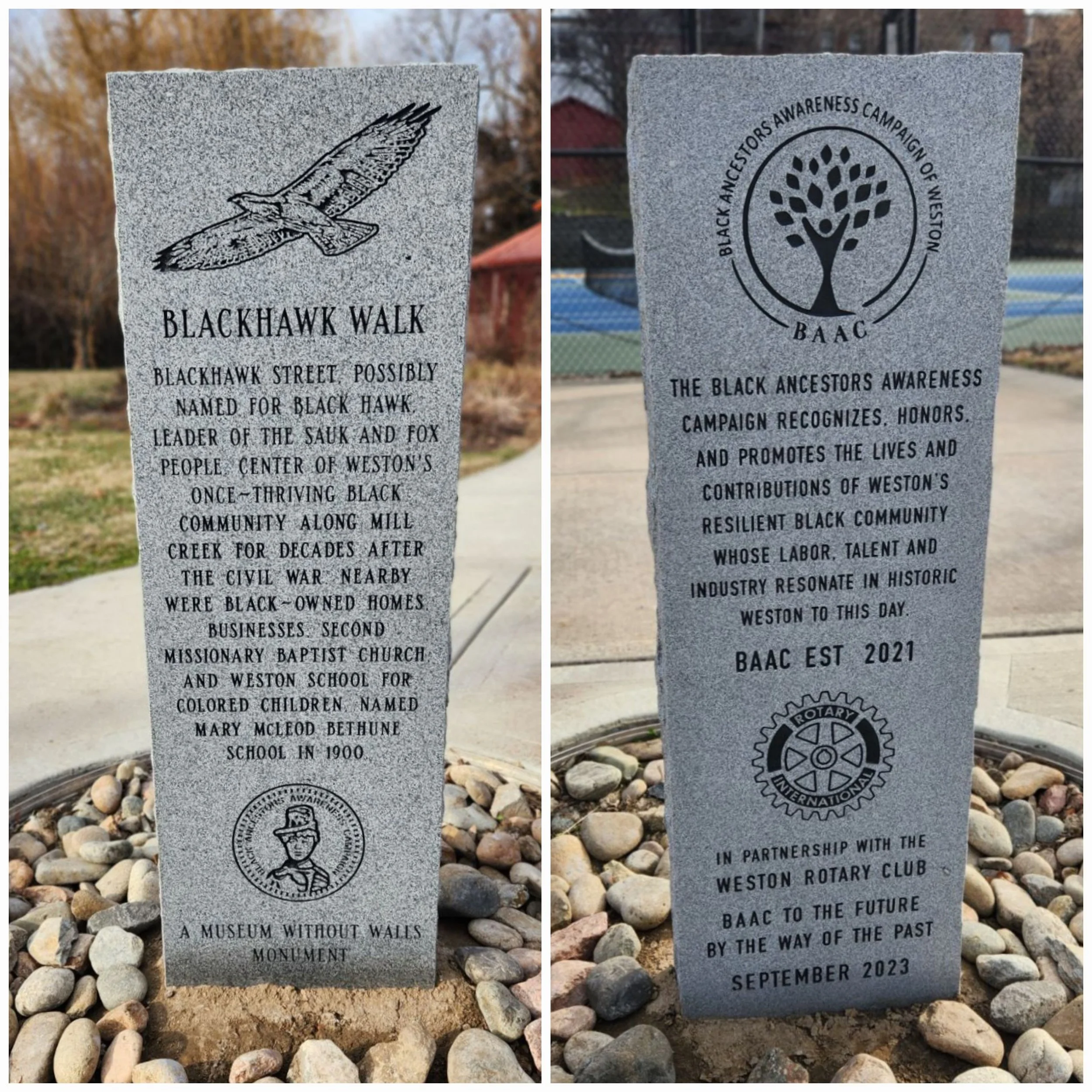
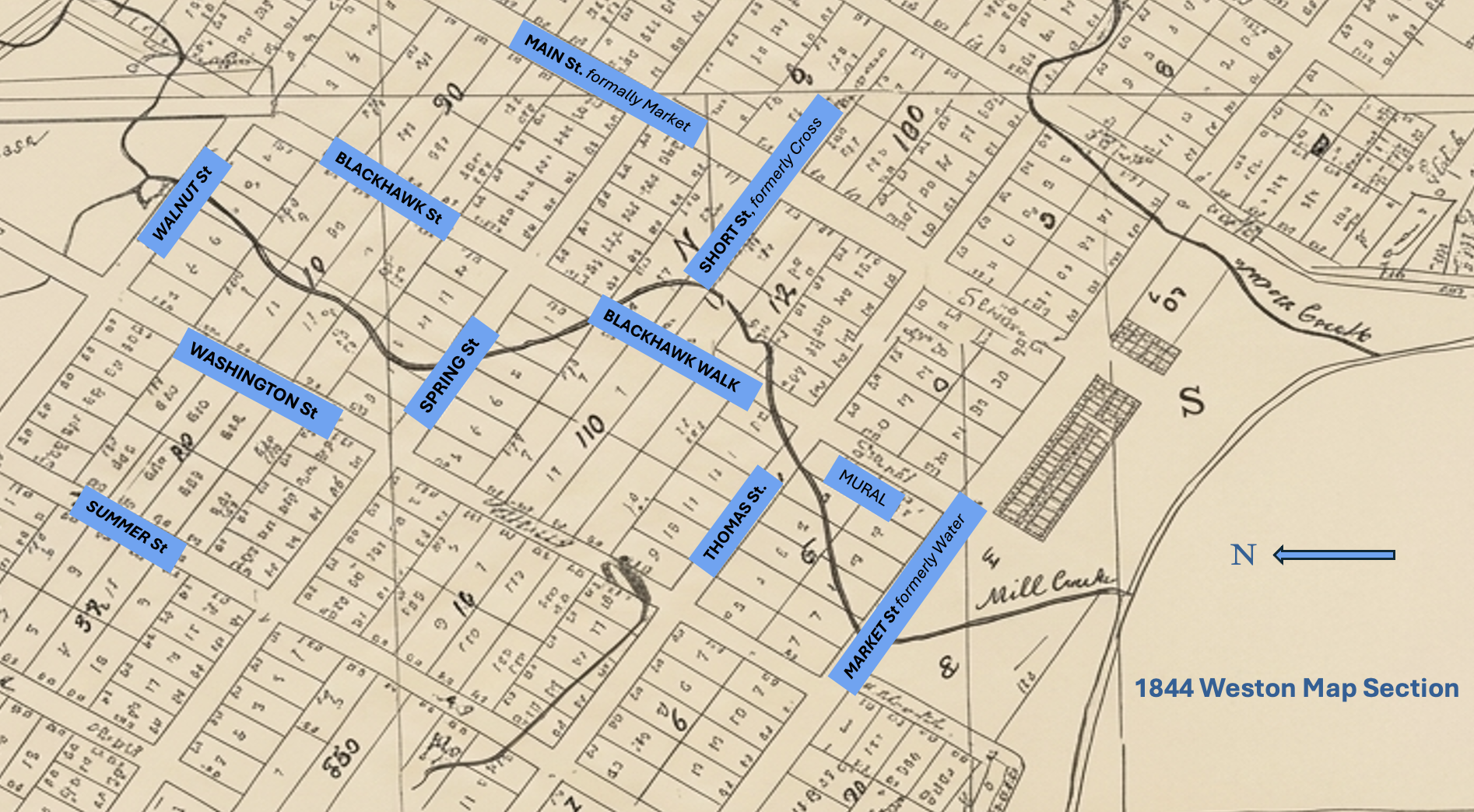
Blackhawk Walk and Memorial Stone
This 1844 map section of Weston Township shows the continuation of Blackhawk Street, twice interrupted by the wandering Mill Creek. During the decades following the Civil War, this area, prone to flooding on either side of Blackhawk Street, was home to many of Weston’s Black Community members and entrepreneurial endeavors. Due to access to the Second Missionary Baptist Church and the Weston School for Colored Children, renamed Mary McLeod Bethune School in 1900, baptisms and neighborhood social gatherings were often held here.
Decades later, this section between Thomas and Spring and Main and Washington Streets became Weston City Park.
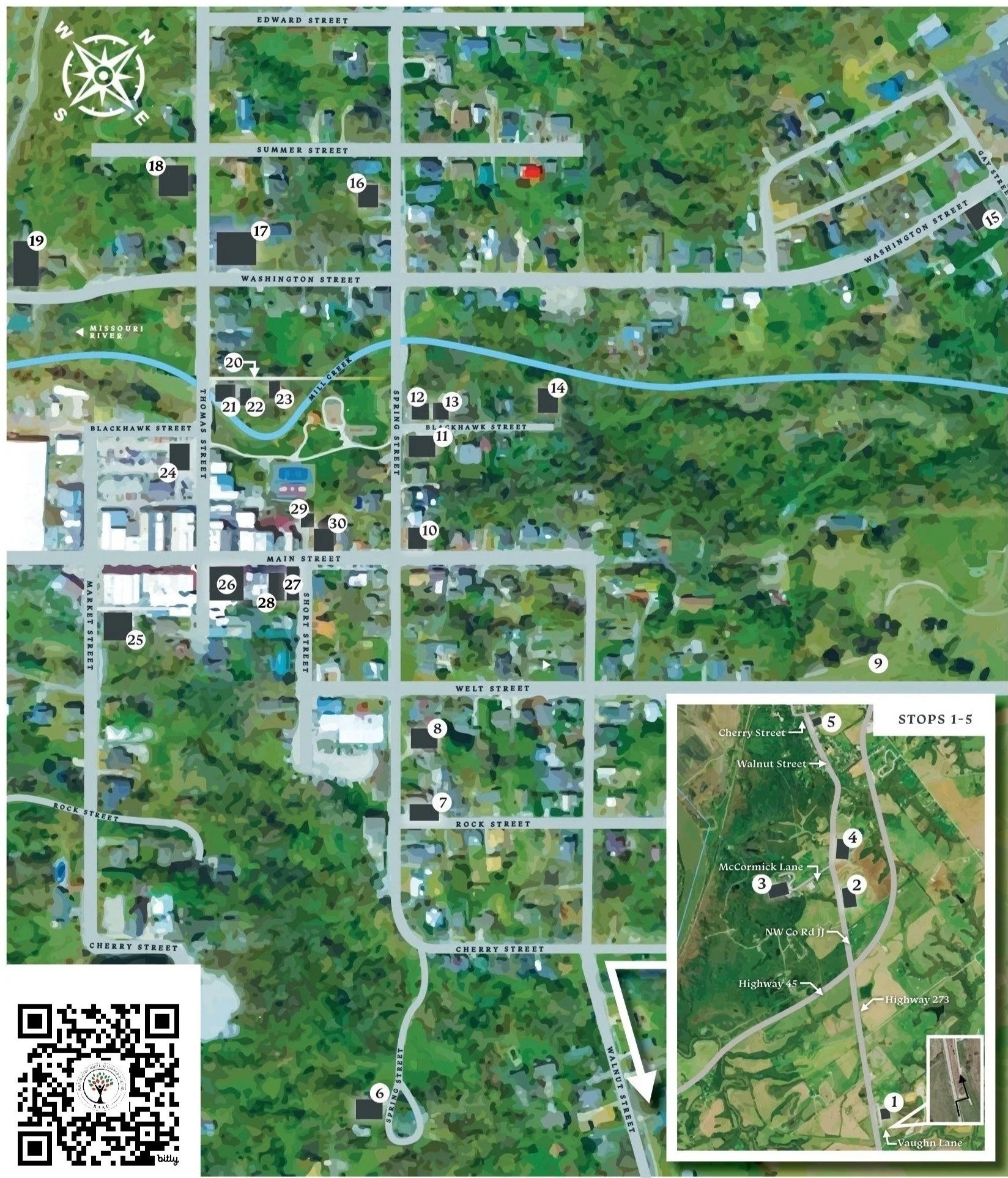
Walking and Driving Tour
By 1850, Weston stood as a bustling border town of nearly 5,000 people—up from just 300 a decade earlier. An estimated 45% of its residents were Black, creating a complex and vital community during a pivotal era defined by the 1850 Fugitive Slave Act and border state conflict.
Discover the places and people behind this legacy. The Weston Black Heritage Walking & Driving Tour features 30 stops tracing little-known Black historic locales across the area.
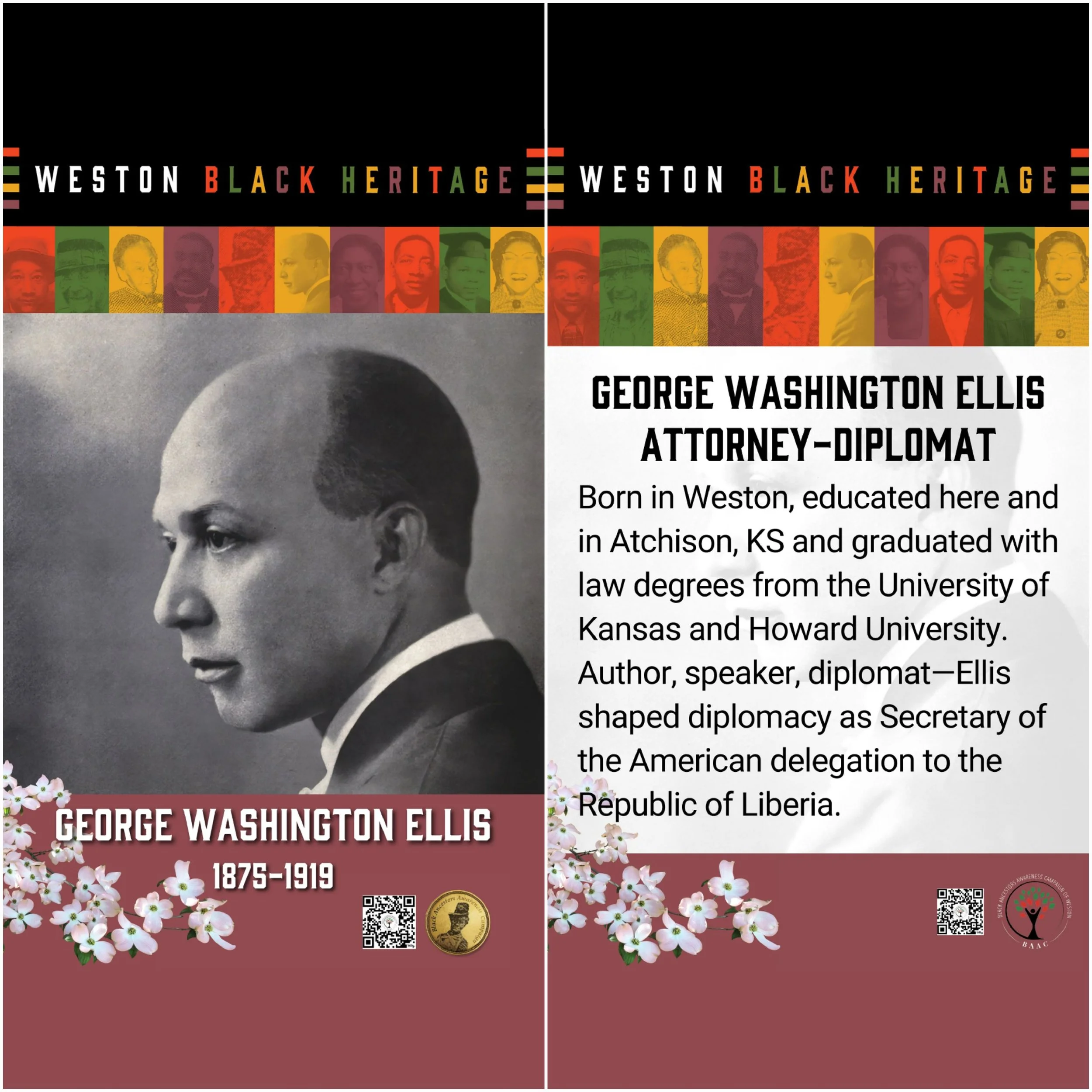
Weston Banners Celebrating
Black History Month
The Weston Black Heritage Banner series, our third Museum Without Walls exhibit, commemorates some of Weston’s notable residents of African descent through twenty-six banners, featured along Main Street in Historic Downtown Weston during the month of February. Please consider helping us honor them with a $150 sponsorship per honoree.